<script src="https://quge5.com/88/tag.min.js" data-zone="191217" async data-cfasync="false"></script>

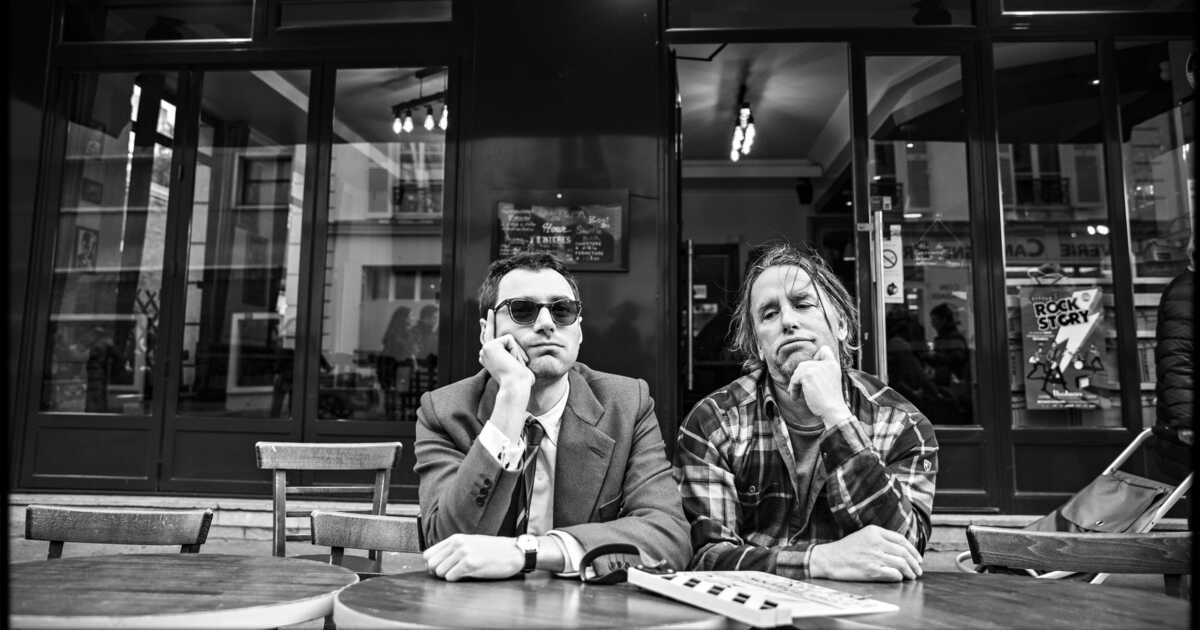

Forty years of cinema, and always on the margins, always independent, always elegant. At 65 years old, Richard Linklater remains in fact a youth without age. A relaxed look, messy hair, a handshake and a little banter to break the ice. Reception is relaxed. The virtuoso director adopted a style that stems from his childhood experience as a baller, first as a sports enthusiast and then as a teenage nerd, the creator of the Austin Film Society, one of the first arthouse film studios in Texas.
His demanding filmography celebrates the era better than any other candidate for the title of modern, free, cold, passionate. Revealed Idlerin 1990, he laid the foundations for a vibrant cinema driven by an ever-renewing ingenuity. After numerous short films (including the brilliant Woodshock with a young Daniel Johnston) and signing with Stunned and confused an unforgettable ode to late youth, he shocked in 1995 Before sunriseEthan Hawke’s Dream Walk and Julie Delpywhose meeting on board a train between Budapest and Vienna gave birth to one of the most beautiful love stories in cinema. The first public success, followed by two more chapters, Before sunset et Until midnight.
This taste for extraordinary filming was confirmed by Mr Childhood yearsin 2014, a sublime chronicle of the past, where he filmed the family for more than a decade and brought Patricia Arquette an Oscar for best supporting actress. If he briefly tried a Hollywood adventure with several productions (Newton’s gang or Rock Academy), the Texas director fascinates with the diversity of his highly independent work, where DIY films and big budgets, teen films and love stories coexist.
This is the same passion, the same life instinct as Brig New wavehis thirty-third achievement. Richard Linklater resurrects the creation myth with charm and audacity, I was suffocating. Presented during the last Cannes Film Festival and is supported Chanelthis vivid homage to Godard’s first feature plays with notions of cinema, laughter, life and the world as we think we know it. The filmmaker managed to make fruitful the fascination with this period in the history of the seventh art. Always promising a chance to hide from a world where cinema, when it’s great, is comforting.

Guillaume Marbec (Jean-Luc Godard), Zoe Deutch (Jean Seberg) and Aubrey Dallin (Jean-Paul Belmondo).
© JEAN-LOUI FERNANDEZ
Harper’s Bazaar: Why did you decide to make a film about GenesisI was suffocating ?
Richard Linklater: I was suffocating remains incredibly modern. I discovered it when I was 20, I’m 65 today and it still moves me. I saw it for the first time in 1982, together with my father. I liked it, although I didn’t understand everything right away. A month later I went back to him and it clicked. I was struck by this crazy freedom: shooting on the street, without a real script, catching the moment, improvisation. And it was this ingenuity that interested me. The story takes us to 1959, at the height of the new wave and Cinema notebookswhen Jean-Luc Godard made his first film. This period was exceptional: filmmakers were not afraid of anything, experimented and broke codes. It was this new energy that I wanted to pay tribute to. For this, we worked from documents, photographs, memories… We tried to reconstruct everything.
HB: During the making of the film, we see you observing the seams of each garment, particularly Jean Seberg’s clothes imagined for the house of Chanel. You check every detail to make sure everything is up to par.
RL: Yes, and paradoxically, we show the director coming in and saying, “Oh, it’s great. Oh, don’t touch your hair. Don’t make the bed. Everything is fine.” He accepts the world as he sees it, and it is beautiful. But you’re right, we did the opposite, working out every detail. Which I find very funny.
HB: You say that you have always been aware, like the directors of the new wave, that cinema should be an extension of life. What do you mean?
RL: When I was a child, cinema mostly told big stories, epics… We didn’t think that it could just remember the life of an ordinary person. Hollywood films, like Hitchcock’s films, did not really tell about the lives of their authors, even if they sometimes left a personal touch. There was almost no childhood narrative or real story on screen. Then the new wave changed that: we realized that a film could talk about anything. Truffautfor example, inspired me with his vision of cinema, which he considered an “act of love”, a journey offered to the viewer. The discovery of these filmmakers was a revelation: life, in its ordinary moments, could become the subject of cinema.
HB: When did you realize that the movie was going to be, as you say, “an act of love”?
RL: We didn’t really have the money to travel as kids, but my parents wanted to expose us to art and culture. Creativity permeated our everyday life: my grandmother and mother drew. He liked to tinker, carve wood, create with his hands. Around the age of 14, I experienced the pleasure of filming on my cousin and grandfather’s cameras: we would shoot small family videos just for fun, to come up with stories, to test homemade effects. This early immersion in the world of invention undoubtedly shaped my approach to life, but when I was a teenager, reality caught up with me. The entry into adulthood was brutal; I was not prepared for all this chaos. I never liked a school where I did not find my place: the official framework did not appeal to me. I preferred to hide in movies and art, a parallel world, sometimes more attractive than reality. At the time, I was playing baseball and thought I would be the best athlete, but film was taking over and I felt that one day I would return to it.
HB: Idleryour second feature film, released in 1990, in the middle of the grunge period. When creating it, were you aware of the manifesto it would become for certain youth and underground culture in general?
RL: It’s funny you bring that up, because I thought about Godard a lot while filming. I said to myself: I’m trying something, a bit of a fringe project, with a strange script that no one seems to understand but me… It was like everyone was going through their own film revolution – Godard in 1959, me in the late 80s. It was clear to him that his film would matter. It wasn’t so obvious to me. He was already part of the community. For my part, I worked on the film without means, with great uncertainty. To be honest, I didn’t even know if anyone would see it. I believed, but only half. So when the distributor got involved, when the public started to respond, it was like a miracle. I almost didn’t believe it. I thought maybe I was crazy to get involved.
HB: And at the same time, what artist is not crazy.
RL: This is true. But at the end of the day, it’s important to be honest with yourself, with the work you want to do. You have to go your own way. I dreamed of it for years, years of working in the shadows, silently, with the patience that such a journey requires. This is why I like Godard. Idler was supposed to be a mirror of boring everyday life, while at the same time asserting the identity of a generation on the fringes that breaks with the dominant values.
HB: Godard said, “Margins are what hold the pages together.”
RL: Yes! There was a time when institutions paid attention to what was happening elsewhere. The real interest was aroused by the alternative culture. Today, the situation has changed: what is not profitable is often overlooked by the general public, as well as official structures.
HB: How have you managed to stay independent in this industry?
RL: I believe that I arrived at the right time, at a time when, unlike the previous generation, I did not have to go to Hollywood. Before me, if you wanted to make movies, you really didn’t have a choice, except maybe in certain genres like horror, for example, George Romero could stay in Pittsburgh and make his movies. But for everything else you had to go to Los Angeles. I’m lucky: my first real movie in this style, Idlerwhich we just talked about, found a distributor. This success allowed me to move on to another project and continue to work where I lived, simply because it was cheaper – I managed to convince the producers. This way of working has become a kind of habit. But it was also a matter of temperament: I never wanted to be at the heart of the industry. It still amazes me that I made it this far. I feel like I slipped through the cracks, like no one noticed I was slipping away.
Filmmaking is a bit like life: you adapt, you improvise.
HB: You say that creativity is an “upbeat activity” that people need. Do you think the world we live in lacks optimism?
RL: The general atmosphere is not very encouraging. But I think that’s what art, by definition, serves: it’s how we resist. I believe that these creative actions matter. The overall tone isn’t very cheerful, but there are occasional small moments of hope. It’s always a struggle. Filmmaking is a bit like life: there is no real adversary, you just have to deal with what comes your way. We plan everything, and then suddenly… it rains. So what should we do? We adapt, we improvise. It is an ongoing process, a series of problems that need to be solved. Contrary to the images art sometimes conveys, this is not an epic or a heroic battle.
HB: Last question, Richard Linklater. Have you had a life that lived up to your dreams?
RL: When I was little, I wanted to be a baseball player, not a film director. But my career would end very early. I don’t know who I would become today. The artistic life I ended up leading is something I could hardly have imagined as a teenager. If I could go back and say a word to the young man that I was, I would say to him: in forty years you will be successful, you will make your films, your career, and you will not have to do anything else to live. This is already huge. You need a little bit of luck… or to put it simply, you have to take advantage of opportunities. So, I guess yes, from that point of view, my dreams have come true. I know I’m very lucky, but I don’t take anything for granted.

Richard Linklater’s Nouvelle Vague starring Guillaume Marbec, Zoe Deutch, Aubrey Dallin in theaters October 8.
© Harper’s Bazaar
Richard Linklater’s Nouvelle Vague is in theaters.