<script src="https://quge5.com/88/tag.min.js" data-zone="191217" async data-cfasync="false"></script>

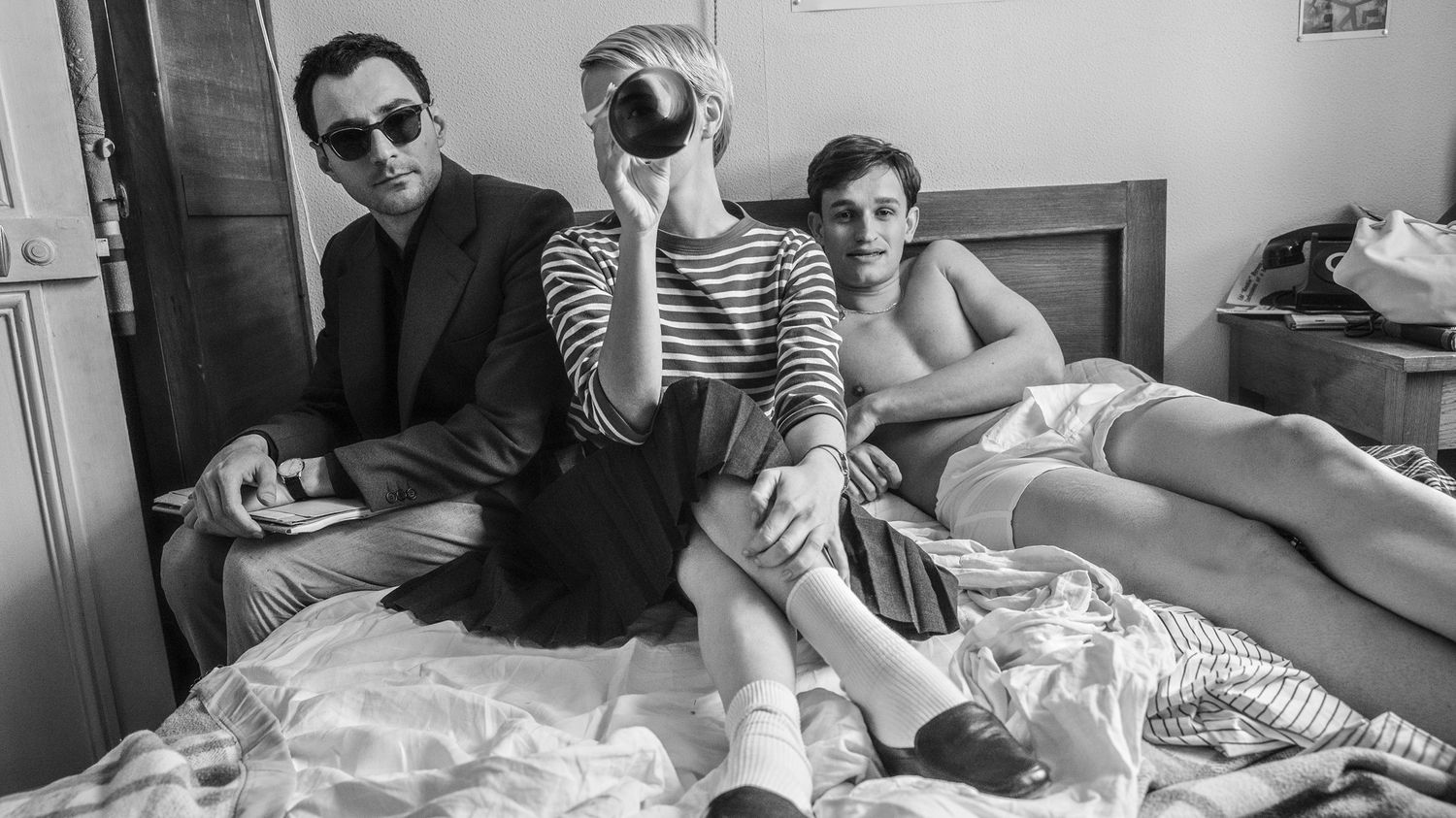

Richard Linklater subverts the intellectual image of the New Wave in a film that is both scholarly and entertaining.
In this new feature film, Richard Linklater, a daring filmmaker Slacker (1991) et with Childhood years (2014), book joyful anatomyHold your breathJean-Luc Godard’s first film. This feature film, in competition at the 2025 Cannes Film Festival, is a little treat as gentle as it is didactic, giving a measure of the revolution in the 7th art caused by this legendary film. It will be released in theaters on Wednesday, October 8.
1959, Jean-Luc Godard — critic Movie notebookswhere he communicated with Chabrol, Rivette, Truffaut, Rohmer… In a word, all those who would lead the cinematic renaissance of the 1960s, which we would call the New Wave. Jean-Luc Godard, known for his harsh criticism, dreams of becoming a director, but at almost 30 years old, he has not yet decided to do so, and he thinks that he “missed the wave”.
https://www.youtube.com/watch?v=NU-7jk3OWA
Producer Georges de Beauregard finally gave him his chance for the first film, for which he enlisted (needless to insist, they were his friends) Truffaut for the script and Chabrol as artistic adviser. Godard dreams of Jean Seberg for his heroine, he will have her. He promised the main role to Belmondo, a boxer whom he had already filmed in a short film, he would keep his word. After writing the script (four hands in the subway with Truffaut), you can start filming.
Godard clearly follows the advice of his mentor Roberto Rossellini: spin fast. “Cinema should not be something mystical” – he declares to the circle of “cinema lovers”. Movie notebooks. “Notes, not a script”, “Stop spinning when you run out of inspiration”. To this, a young cinematographer who wants to revolutionize the seventh art adds his own rules, or rather, throws all the rules into disarray. “Not following the rules will get me where I want to go.” he argues when we try to get him back on track.
A young film director reinvents everything. He chose a mobile camera without sound synchronization, held by a cinematographer accustomed to the war zone. He gives the text to the actors at the last moment and does without rehearsal. (“The more we repeat, the further we move away from life”). It is freed from the restrictions associated with connections (“Life is not okay”), and does not hesitate to shoot light shots in full face (“I want the film to suffer, to suffocate too”).
Without make-up and for Jean Seberg, who is protesting. “My clothes are already from Prisunik, could I at least put on a little makeup?”. Godar does not respect schedules (“Well, are there schedules?”), interrupts shooting days after two hours, calls sick when he “I ran out of ideas.”
:quality(50)/2025/09/22/nouvelle-vague-68d15bb60381a515113999.jpg)
The team laughs, adjusts. Even if Jean Seberg almost walks off the set several times, and the producer tears his hair out, Godard stays the course. “It’s not about where I get things, it’s about where I get them.” – says the director, a lover of quotes and apt formulas. What he wants, he says it is “the fixation of the momentary, the unexpected.” Belmondo brings its joy and its sophistication. Filming ends.
The editing issue is summed up by Richard Linklater in two sentences and three frames. this is enough. We understood Godard’s method: the systematic selection of an opposite approach. It won’t cut any scenes, but “in scenes“It will allow the story to move at the right pace.” Damn image swings: “The public will accept our new truth”se convince Godard. “Artists and criminals want to surpriseThe director succeeded so much that his film became an emblem of the New Wave, “one of the most important films in history”, is evaluated Linklater.
With a well-paced production, black and white images set to jazz tunes and a well-formed cast (strangers with just the right amount of resemblance to people who existed), the American director managed to make us understand in less than two hours the scale of the revolution that took place during those twenty days of filming.
A “film buff” himself (he already paid tribute to Orson Welles in 2009), Linklater resists the temptation to make a specialist film, but creates a wonderful comedy in which we feel the excitement and richness of this era, carried by the wind of freedom that heralds the social and political revolutions to come.
Casting an amusing, slightly mocking look at Godard, he desecrates this monument of world cinema, shining a bright light on his genius, not forgetting to show how cinema is a team effort, and there is a big place for everyone who participated in the creation of this iconic film. At the beginning of the story, Jean-Luc Godard, with dark glasses on his nose, is a viewer of someone else’s movie in a dark room. At the end, the same shot, this time his film in the reflection of his glasses. The circle closed. With this confession of his love for cinema, Linklater offers us a real treat.
:quality(50)/2025/05/17/nouvelle-vague-i-affiche-teaser-1-6828d425d2065612626941.jpg)
genre: Comedy
Realization: Richard Linklater
with: Guillaume Marbec, Zoe Deutsch, Aubrey Dallin
Pays: France
Duration: 1 hour 45 minutes
Departure: October 8, 2025
Distributor: ARP selection
Compendium : This is the story of Godard’s turnaround I was suffocatingtold in the style and spirit of Godar’s turn I was suffocating.